
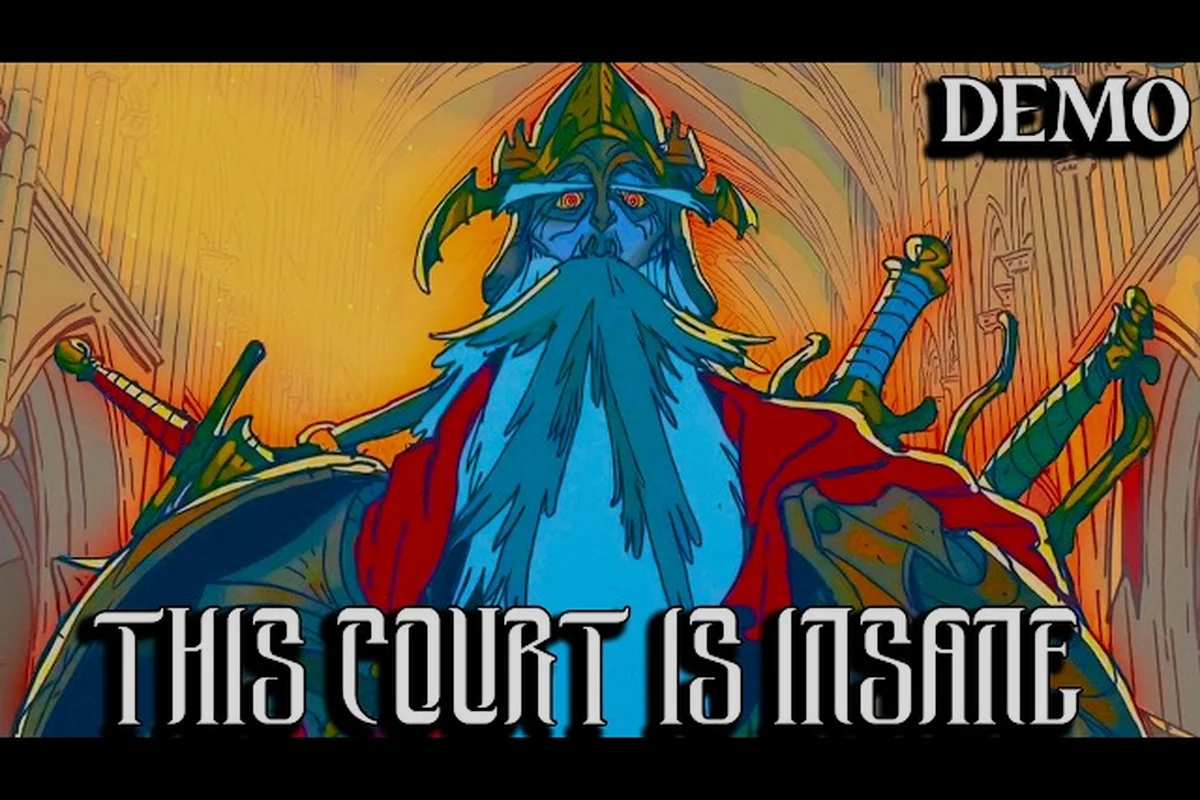
The moment you lose a favorite knight to a critical failure, the game offers you a way back — but the price is steeper than it looks. Sovereign Tower time travel isn't a simple undo button; it's a narrative weapon that reshapes every decision you make, and understanding it early will save you dozens of hours of regret. PC Gamer has called this system one of the best time travel mechanics it has ever encountered, and once you see how deeply it integrates with the story, you'll understand why.
Understanding the Sovereign Tower Time Travel System End to End
Sovereign Tower time travel revolves around a pact with the demon of the crypts, a mysterious entity that dwells beneath your tower. When you accept its offer, you gain the ability to step backward through your reign, revisiting past court audiences, quests, and dialogue choices. IGN's hands-on preview confirms that using this power unlocks alternate dialogue in situations you've already seen, all tracked through a special Omniscience stat.
The system works differently from traditional save-scumming because it's diegetic — the demon exists inside the world, and it remembers everything you do. This means your repeated attempts aren't hidden; they become part of the narrative fabric. Characters may comment on your familiarity with certain events, and some paths only open after you've witnessed their failures multiple times.
Here's what makes the system tick: This progression system prevents players from abusing full resets early in the game while still allowing the flexibility that makes time travel so powerful. Here's the strategic framework that experienced players recommend: The system is powerful, but it's also punishing if used carelessly.
-
The demon appears in the crypts beneath your tower, accessible after the first major story beat
-
Each rewind costs resources — typically a portion of your treasury or a permanent stat reduction
-
Knowledge persists across rewinds — you retain memories, intel, and faction insights
-
The Omniscience stat tracks how much you've learned through repeated timelines
-
Some endings require multiple rewinds to unlock the full truth
The demon's omniscience mechanic is what separates this from a simple reload system. As you rewind, you accumulate knowledge that translates into gameplay advantages — better quest success rates, hidden dialogue options, and even new recruitment opportunities. The deeper you go, the more the game acknowledges your temporal meddling.
The Demon of the Crypts: Your Temporal Patron
The sovereign tower demon isn't a villain in the traditional sense — it's more of a cosmic accountant who collects memories in exchange for second chances. Players report that the demon's personality shifts based on how often you use its power, becoming more familiar and even playful if you rewind frequently.
When you first descend into the sovereign tower crypts, you'll find the demon chained to an ancient altar. It offers you a simple deal: your memories in exchange for temporal power. Accepting this pact permanently alters your relationship with time, and there's no going back once you've made the deal.
The demon's role extends beyond just rewinding: The demon's omniscience mechanic is what separates this from a simple reload system. These techniques go beyond simple rewind usage and leverage the system's deeper mechanics. The demon's omniscience makes this possible because knowledge accumulation isn't limited to a single timeline.
| Demon Feature | What It Does | Strategic Value |
|---|---|---|
| Memory Vault | Stores knowledge from failed timelines | Unlocks hidden dialogue and quest options |
| Temporal Echo | Shows glimpses of future events | Helps plan long-term faction strategy |
| Reality Anchor | Prevents permanent death of one knight per rewind | Protects key roster members |
| Cryptic Warnings | Hints at upcoming disasters | Allows preemptive resource allocation |
| Soul Ledger | Tracks how many lives you've "borrowed" | Affects ending availability |
According to community data, the demon's true nature is revealed only after you've used its power at least three times. Players who rush through the game without ever visiting the crypts miss an entire layer of storytelling that ties directly into the game's darker themes.
What the Demon Takes in Return
Every rewind has a cost, and the demon is never generous without compensation. The exact price varies based on how far back you travel and what you're trying to preserve, but the core principle remains consistent: you must sacrifice something meaningful.
The most common costs include:
-
Treasury percentage — the demon takes a cut of your gold reserves
-
Faction standing — one or more factions lose trust in your leadership
-
Knight loyalty — a random knight questions your judgment
-
Stat penalties — temporary reductions to your core attributes
-
Story knowledge — you forget certain events that haven't "happened" yet
Each cost type creates interesting trade-offs. For example, sacrificing faction standing might be worth it if you're trying to save a crucial knight from death, but it could set back your reputation progress significantly. The sovereign tower demon doesn't offer discounts or mercy — it expects fair payment for every temporal intervention.
How Omniscience Transforms Your Playthrough
The Omniscience stat is the key to unlocking Sovereign Tower time travel's full potential. Every time you rewind and experience a scene differently, you gain points in this stat. These points accumulate across your entire playthrough, opening new dialogue options, revealing hidden information, and even changing how characters perceive you.
IGN's preview specifically highlights how the Omniscience stat tags alternate dialogue in situations you've already seen. This means your second (or third) time through a conversation, you'll have new choices available — choices that acknowledge your temporal awareness. Some players report entire conversation branches that only exist for high-Omniscience runs.
Here's how the stat scales:
| Omniscience Level | Unlock | Gameplay Impact |
|---|---|---|
| 1-10 | Basic memory recall | Slight success rate boosts on familiar quests |
| 11-20 | Hidden dialogue options | New faction interaction paths |
| 21-30 | Temporal foresight | Ability to predict quest outcomes |
| 31-40 | Knight insight | Reveals hidden personality traits |
| 41-50 | Reality manipulation | Unique endings and romance options |
The sovereign tower time travel mechanic rewards players who experiment with different choices rather than trying to perfect everything on the first attempt. Each failed timeline contributes to your Omniscience, making future runs more informed and more successful. The sovereign tower time travel system rewards strategic thinking about opportunity costs.
The Knowledge Persistence Loop
One of the most elegant aspects of this system is how knowledge persists across rewinds. When you rewind time, you don't lose the lessons you learned — the demon's omniscience ensures that your consciousness carries forward. This creates a fascinating gameplay loop:
-
Attempt a quest with incomplete information
-
Fail or achieve a suboptimal outcome
-
Rewind using the demon's power
-
Apply your new knowledge to the same situation
-
Achieve a better result — or discover a completely different path
This loop transforms failure from a frustrating setback into a valuable learning tool. Seasoned players deliberately trigger failures in certain quests just to see what alternate outcomes exist, because the knowledge gained often outweighs the temporary cost of the rewind.
For a deeper look at how this mechanic works in practice, check out our comprehensive time travel mechanic breakdown that covers the technical details and community-tested strategies. For players who want to dive even deeper into advanced strategies, our complete rewind guide covers the full spectrum of time travel techniques, including the exact conditions for triggering hidden demon interactions.
The Sovereign Tower Crypts: Your Gateway to Rewinds
The sovereign tower crypts serve as the physical location where all time travel happens. Located deep beneath your tower, this labyrinthine area is both a narrative space and a gameplay hub. The demon resides at its heart, but the crypts themselves contain secrets worth exploring.
Players who thoroughly explore the crypts report finding: Some players report entire conversation branches that only exist for high-Omniscience runs. Players who follow this framework report significantly better outcomes than those who rewind reactively. The crypts can be disorienting on your first visit, but experienced players have mapped out efficient routes.
-
Ancient artifacts that boost Omniscience gain
-
Hidden chambers with lore about the tower's original purpose
-
Bone altars that allow targeted rewinds (rewinding specific events instead of everything)
-
Echo chambers where you can replay past audiences without cost
-
The demon's true form — revealed through specific quest chains
The crypts aren't just a menu interface disguised as a location; they're a fully realized environment that rewards exploration. Some of the game's best hidden content lives in the crypts' side passages, and players who rush straight to the demon miss out on significant rewards.
Navigating the Crypts Efficiently
The crypts can be disorienting on your first visit, but experienced players have mapped out efficient routes. The key is understanding that different crypt levels correspond to different rewind types: The sovereign tower time travel mechanic rewards players who experiment with different choices rather than trying to perfect everything on the first attempt.
| Crypt Level | Rewind Type | Best Used For |
|---|---|---|
| Upper Crypts | Small-time rewinds (hours) | Fixing single quest failures |
| Middle Crypts | Day-level rewinds | Correcting audience mistakes |
| Lower Crypts | Week-level rewinds | Major strategy overhauls |
| The Demon's Chamber | Full resets | Complete playthrough restarts |
The sovereign tower demon becomes more accessible as you progress deeper, but each level requires specific keys or quest completions to unlock. This progression system prevents players from abusing full resets early in the game while still allowing the flexibility that makes time travel so powerful.
For those wondering about the practical steps of initiating a rewind, our how to rewind time guide walks through the exact process, including the resource requirements and timing considerations. Every rewind you perform is a resource you can't use elsewhere, so players who hoard their temporal power for truly critical moments tend to perform better than those who rewind constantly.
Strategic Use of Time Travel: When to Rewind and When to Accept
Knowing how to use Sovereign Tower time travel effectively is more important than knowing how it works. The system is powerful, but it's also punishing if used carelessly. Smart players develop a clear framework for when rewinds are worth the cost and when they're a trap.
Here's the strategic framework that experienced players recommend: Players who follow this framework report significantly better outcomes than those who rewind reactively. The crypts can be disorienting on your first visit, but experienced players have mapped out efficient routes. Smart players develop a clear framework for when rewinds are worth the cost and when they're a trap.
-
Always rewind to save a high-value knight — losing a S-tier knight to a random critical failure is almost always worth the rewind cost
-
Never rewind for minor faction disapproval — small reputation hits are recoverable through normal gameplay
-
Rewind before major story decisions — if you're unsure about a choice that affects endings, the rewind cost is justified
-
Avoid rewinding for resource losses — money and materials can be earned back; time travel costs compound
-
Use Omniscience-gated rewinds wisely — some rewinds unlock new information, making them investments rather than expenses
The sovereign tower time travel system rewards strategic thinking about opportunity costs. Every rewind you perform is a resource you can't use elsewhere, so players who hoard their temporal power for truly critical moments tend to perform better than those who rewind constantly.
The Optimal Rewind Framework
-
Tier 1 — Mandatory Rewinds: Knight deaths of high-value characters, failed romance events, missed achievement opportunities. These are always worth the cost.
-
Tier 2 — Situational Rewinds: Quest failures that block progression, faction reputation crashes, suboptimal ending conditions. Rewind only if you have sufficient resources.
-
Tier 3 — Optional Rewinds: Minor dialogue variations, exploration of alternate paths, curiosity-driven resets. Only do these when you have excess resources or are specifically farming Omniscience.
Players who follow this framework report significantly better outcomes than those who rewind reactively. The key insight is that time travel is a strategic resource, not a safety net — and treating it as the former transforms your entire approach to the game.
Advanced Time Travel Tactics and Hidden Interactions
Once you've mastered the basics of Sovereign Tower time travel, advanced tactics can dramatically improve your playthrough quality. These techniques go beyond simple rewind usage and leverage the system's deeper mechanics. The sovereign tower crypts also contain a secret room accessible only after you've used time travel at least five times.
One of the most powerful advanced techniques is timeline stacking. This involves rewinding to a specific point while retaining knowledge from multiple previous timelines, effectively creating a "perfect" run that incorporates the best outcomes from several attempts. The demon's omniscience makes this possible because knowledge accumulation isn't limited to a single timeline.
Other advanced tactics include:
-
Strategic failure farming — deliberately failing quests to unlock their hidden success conditions
-
Faction memory exploitation — using knowledge of faction preferences to maximize audience approval
-
Knight loyalty preservation — rewinding before loyalty-crushing events to maintain roster stability
-
Romance timeline optimization — using rewinds to pursue multiple romance paths simultaneously
-
Crypt exploration synergy — combining crypt exploration with rewind mechanics for maximum Omniscience gain
The sovereign tower demon also has hidden interactions that only trigger under specific conditions. Players report that using rewind exactly seven times in a single playthrough unlocks a special dialogue with the demon that reveals its true motivations. Similarly, refusing the demon's offer at specific story moments can lead to unique outcomes that time-travel-happy players never see.
Cross-Reference: The Rewind Guide Connection
For players who want to dive even deeper into advanced strategies, our complete rewind guide covers the full spectrum of time travel techniques, including the exact conditions for triggering hidden demon interactions. It also includes community-verified data on rewind costs across different game phases.
The sovereign tower crypts also contain a secret room accessible only after you've used time travel at least five times. This room contains the Demon's Journal, which provides detailed lore about the demon's origins and its connection to the tower itself. Finding this journal is a priority for lore enthusiasts, as it recontextualizes the entire time travel system.
Frequently Asked Questions
What is the sovereign tower demon's deal exactly?
The demon in the crypts offers you the ability to rewind time in exchange for memories and resources. When you accept, you gain the Omniscience stat and the power to revisit past events, but you must sacrifice something meaningful with each rewind. The demon appears neutral but has its own agenda that unfolds over multiple rewinds.
How does the Omniscience stat affect gameplay?
Omniscience accumulates each time you rewind and experience events differently. Higher Omniscience unlocks hidden dialogue options, reveals character traits, improves quest success rates, and eventually enables unique endings. The stat essentially measures how much temporal knowledge you've accumulated, and the game rewards you for embracing the time travel system.
Can I rewind without visiting the sovereign tower crypts?
No, the crypts are the only location where rewind mechanics are available. The demon's power is tied to its physical location beneath the tower, and you must descend to the crypts to initiate any time travel. This limitation prevents mid-quest rewinds and forces players to plan their temporal interventions carefully.
Is there a limit to how many times I can rewind?
There's no hard cap, but each rewind costs resources that become increasingly expensive. Additionally, the demon's Soul Ledger tracks your total rewinds, and using the power too frequently can lock you out of certain endings. Most players find that 8-12 well-timed rewinds per playthrough is the sweet spot.
Do all characters remember my time travel?
Characters with high intelligence or mystical awareness may comment on your temporal meddling, but most NPCs don't retain memories across timelines. Your knights and court members generally treat each timeline as fresh, though the Omniscience stat occasionally unlocks dialogue where characters seem to have vague recollections.